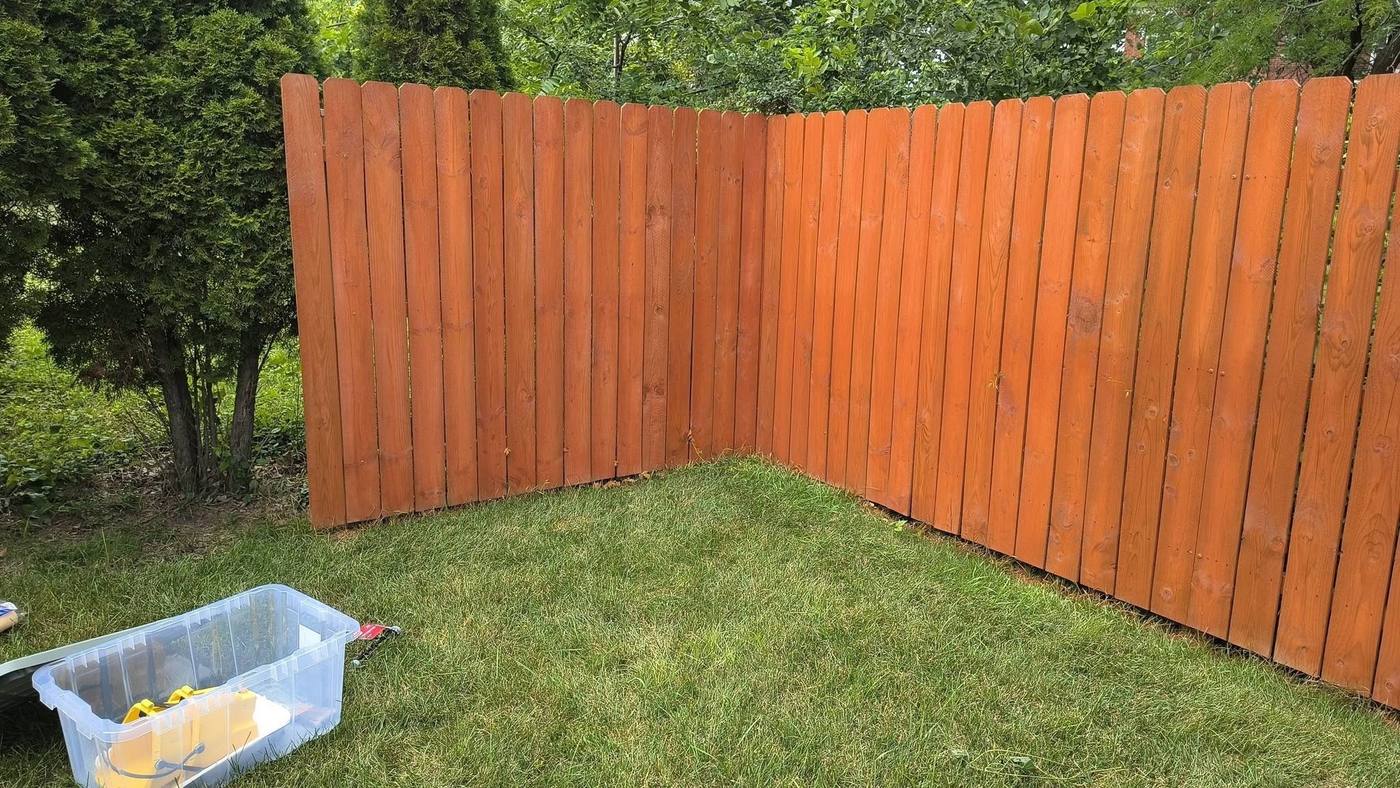
deck repair near me
Replace rotted or split boards, re-fasten loose decking and tighten railings before we stain. Based in Libertyville, serving all of Lake County IL and southeast Wisconsin.
Deck, stripped and refinished
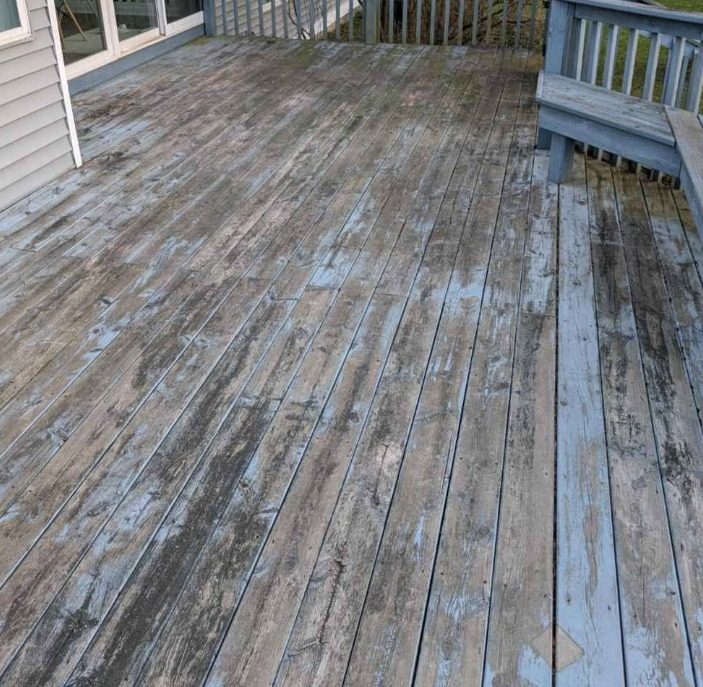
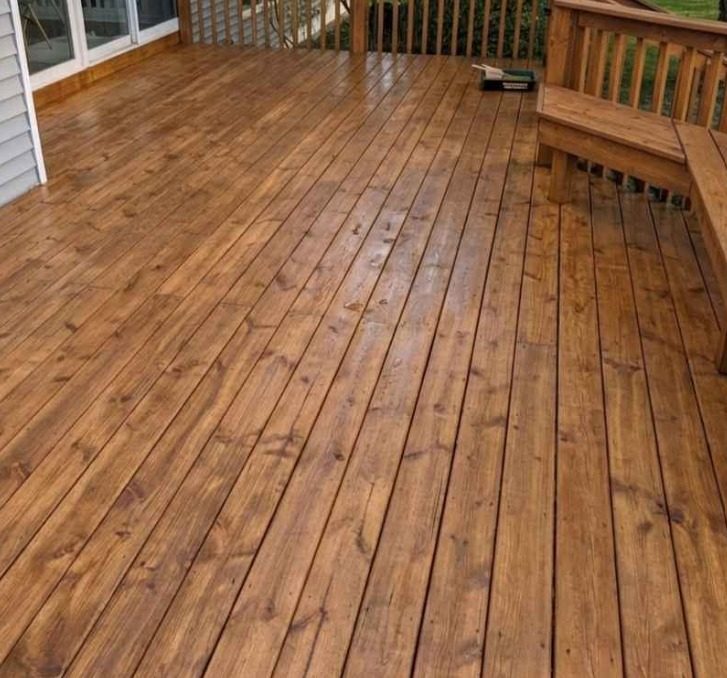
Most decks that come to us for staining have a few boards that should be replaced first: a split board near the stairs, a soft spot where a planter sat, spindles that wiggle, a stair tread that bounces. We handle that repair work as part of the staining job so you are not coordinating two contractors and the new boards get stained with the rest of the deck.
This is board-level repair, not structural rebuilding. If we find rot in the joists, beams or ledger, we will show you and tell you it is a job for a deck builder. For everything above the framing, we have you covered.
Staining over a rotted board is a waste of stain. It also hides the problem for a year until someone puts a foot through it. Replacing a handful of boards before staining is cheap, and new cedar or treated boards blend in well once everything is stained the same tone. We also re-drive popped nails and swap them for screws so they stop lifting.
We do a lot of this work in Gurnee, Mundelein and Indian Creek, and the central Lake County towns like Vernon Hills and Green Oaks keep us busy through the season. See every town on the areas page, or jump to Deck repair in Mettawa.
Deck repair usually pairs with one of these.
Text a photo of your deck or fence and get a number back. We answer Mon–Sat 7am–7pm.
Text (224) 944-8652Replaced with matching cedar or treated lumber and screwed down.
Probed to find the extent. If it is the board, it is replaced. If it is the joist, we tell you.
Pulled and replaced with coated deck screws so they stop lifting each spring.
Re-fastened or replaced. Wobbly posts are through-bolted.
Usually a loose stringer connection or a cracked tread. Both are quick fixes.
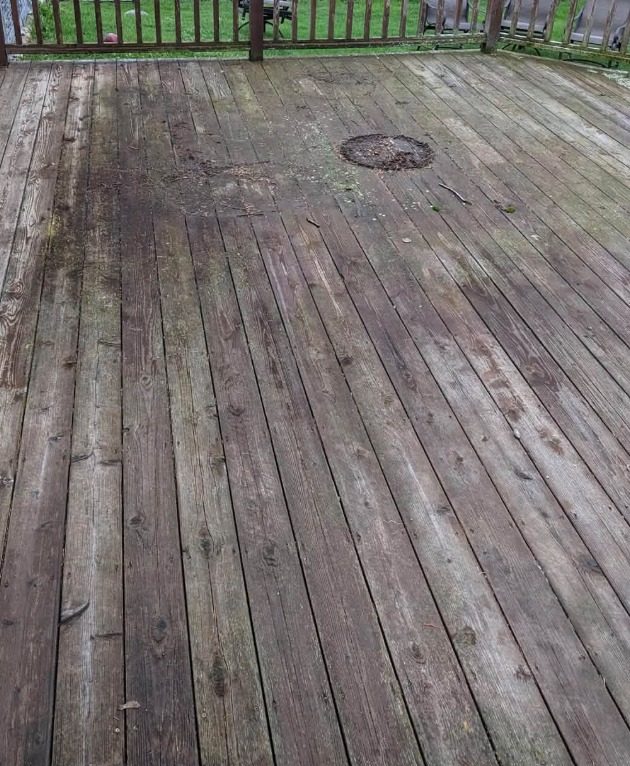
See the pricing page for how we quote, or text photos and get a real number.
Our season runs roughly late April through October. Stain needs the wood dry, temperatures between about 50 and 90 degrees, and 24 to 48 hours without rain afterward. In Lake County that means spring and early fall are the best windows, with midsummer jobs scheduled around heat and pop-up storms. We book spring work early because the good weeks fill fast.
After staining, keep furniture and foot traffic off for 24 to 48 hours, longer if it is humid. Rinse pollen and leaves off through the season instead of letting them sit and hold moisture. Move planters and rugs periodically so they do not leave shadows. Rinse the deck each spring with a hose, and when water stops beading on the horizontal boards, that is the signal for a maintenance coat. Done on that schedule, a deck never needs stripping again.
New wood is lighter than 15-year-old wood. Once the deck is cleaned, brightened and stained together, a semi-transparent or semi-solid stain evens it out. With a clear sealer, new boards will show for a season.
Usually. Most wobbly rails are loose post connections, and through-bolting or adding blocking fixes them. If the post itself is rotted at the base it gets replaced.
No. Joists, beams, ledgers and footings are a deck builder's work and often need a permit. We will tell you what we found so you can call the right trade.
Screws. Nails lift with seasonal movement and become a trip hazard. We replace popped nails with coated deck screws.
Every town we serve has its own deck repair page.
Text a photo of the wood and your town. Quotes usually come back the same day.
Text a photo of your deck or fence and get a number back. We answer Mon–Sat 7am–7pm.
 Lake CountyFence & Deck Restoration