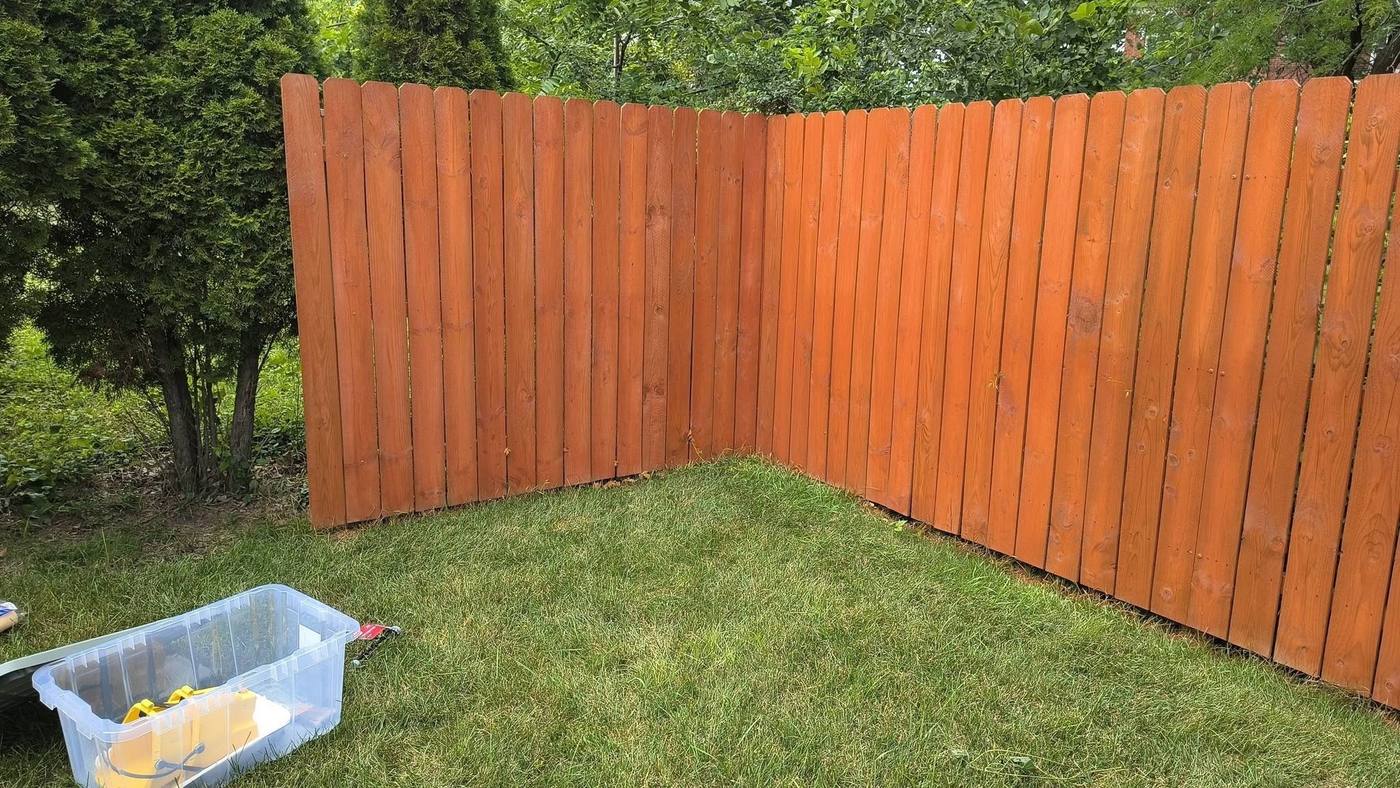
deck cleaning service
Low-pressure wash with a wood-safe cleaner that removes gray, mildew and algae without furring the boards. Based in Libertyville, serving all of Lake County IL and southeast Wisconsin.
Deck, stripped and refinished
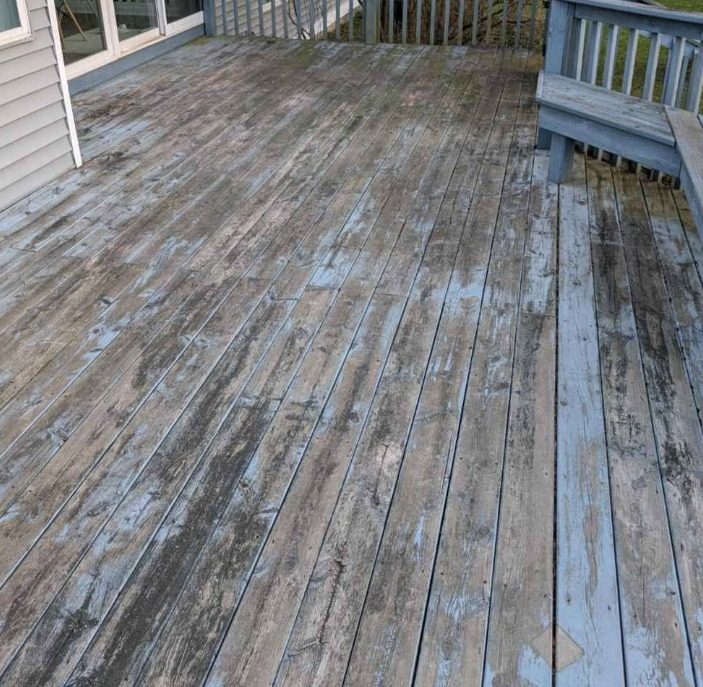
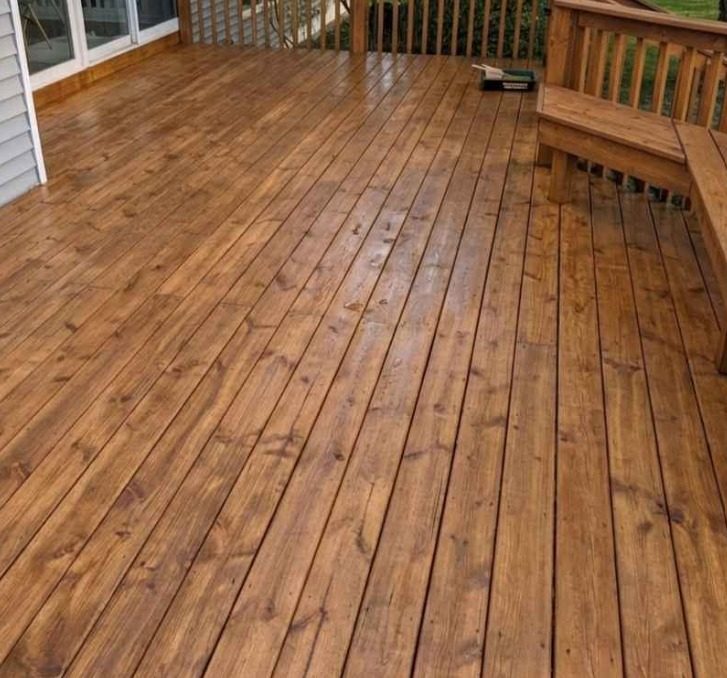
A dirty deck is not just ugly. Mildew, algae and pollen hold moisture against the wood, and the gray you see is the top layer of fibers oxidizing and letting go. Cleaning it off once a year keeps the surface sound and makes the next stain job smaller. In shaded Lake County yards with mature oaks and maples, a north-facing deck can go green in a single wet spring.
Our deck cleaning is a wash, not a blast. We use a sodium percarbonate cleaner to lift the growth and oxidation, then a low-pressure rinse with a fan tip held well off the boards. A 3,000 PSI pressure washer with a narrow tip will cut grooves into cedar and leave fuzz on pine. That damage is permanent.
The most common deck we see is one a homeowner or a general power-washing company went over at high pressure. The boards look clean for a week, then dry out fuzzy and gray. The pressure tore the surface fibers loose. A chemical clean does the work, and the pressure only rinses. If your deck is due for stain, the cleaning is step one and we roll it into the staining job.
We do a lot of this work in Gurnee, Mundelein and Indian Creek, and the central Lake County towns like Vernon Hills and Green Oaks keep us busy through the season. See every town on the areas page, or jump to Deck cleaning in Mettawa.
Deck cleaning usually pairs with one of these.
Text a photo of your deck or fence and get a number back. We answer Mon–Sat 7am–7pm.
Text (224) 944-8652Mildew and algae in the north-side boards. A percarbonate wash lifts it; pressure alone just spreads it.
Someone pressure-washed it too hard. Cleaning cannot undo that, but a light sand and stain will settle the surface.
Trapped moisture. Cleaning removes the stain; moving the planter onto feet keeps it from coming back.
Spring maple and oak drop leaves tannin stains that a brightener removes.
A degreaser step before the main wash.
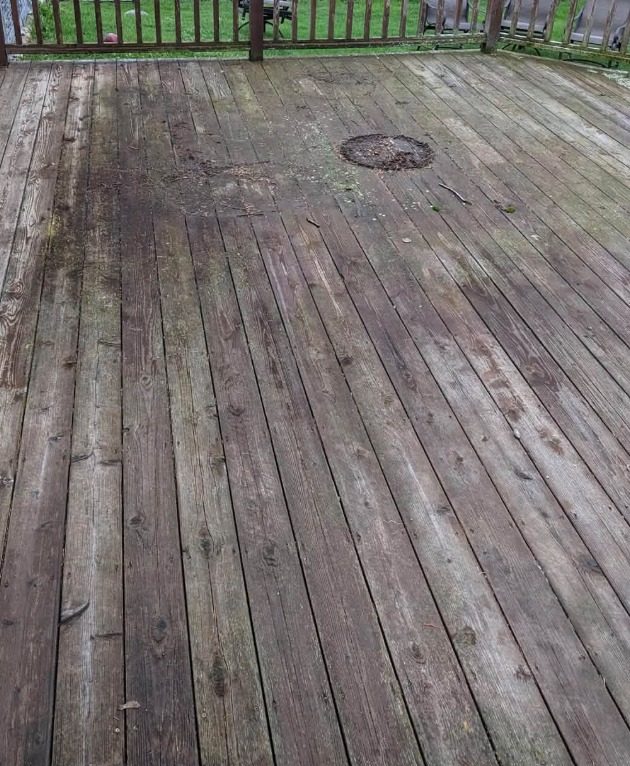
See the pricing page for how we quote, or text photos and get a real number.
Our season runs roughly late April through October. Stain needs the wood dry, temperatures between about 50 and 90 degrees, and 24 to 48 hours without rain afterward. In Lake County that means spring and early fall are the best windows, with midsummer jobs scheduled around heat and pop-up storms. We book spring work early because the good weeks fill fast.
After staining, keep furniture and foot traffic off for 24 to 48 hours, longer if it is humid. Rinse pollen and leaves off through the season instead of letting them sit and hold moisture. Move planters and rugs periodically so they do not leave shadows. Rinse the deck each spring with a hose, and when water stops beading on the horizontal boards, that is the signal for a maintenance coat. Done on that schedule, a deck never needs stripping again.
High pressure is. Anything over about 1,200 PSI or a narrow tip close to the boards will tear the soft grain and leave the wood fuzzy and more absorbent. We use a chemical cleaner to do the work and low pressure only to rinse.
Yes. Composite and PVC decks need a different cleaner and a gentler rinse. See our composite deck cleaning page for how that works.
Most decks are two to four hours on site. Drying takes one to three days depending on sun and humidity, and the deck should not be stained until it reads dry with a moisture meter.
A cleaner lifts weathered, chalky stain and gray wood. It will not remove a sound film-forming stain or paint. For that we strip, which is a separate step.
No. We need the deck clear of furniture and access to an outdoor spigot. Most cleanings are done while people are at work.
Every town we serve has its own deck cleaning page.
Text a photo of the wood and your town. Quotes usually come back the same day.
Text a photo of your deck or fence and get a number back. We answer Mon–Sat 7am–7pm.
 Lake CountyFence & Deck Restoration