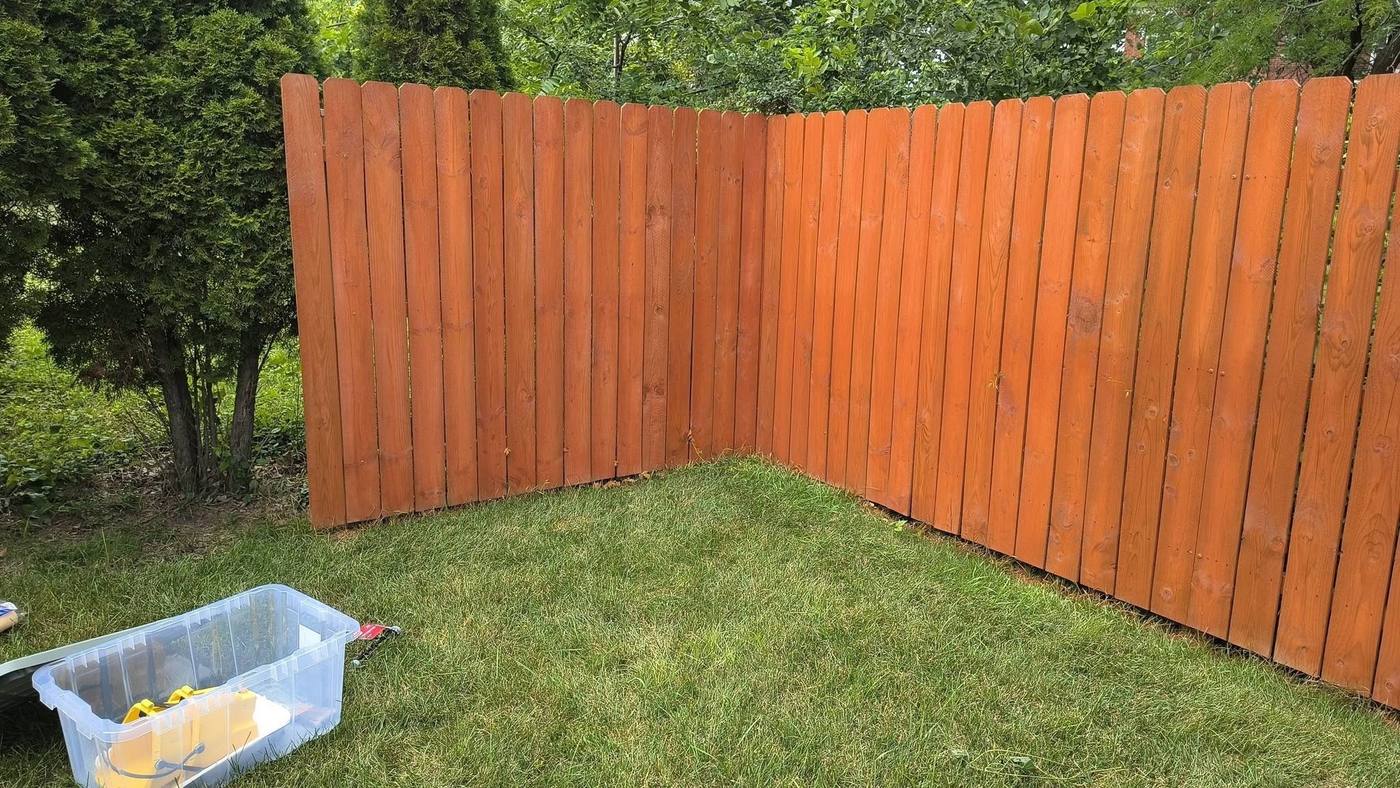
deck staining near me
Wash, prep and stain your wood deck with a penetrating oil or hybrid stain that holds up to Lake County winters. Based in Libertyville, serving all of Lake County IL and southeast Wisconsin.
Deck, stripped and refinished
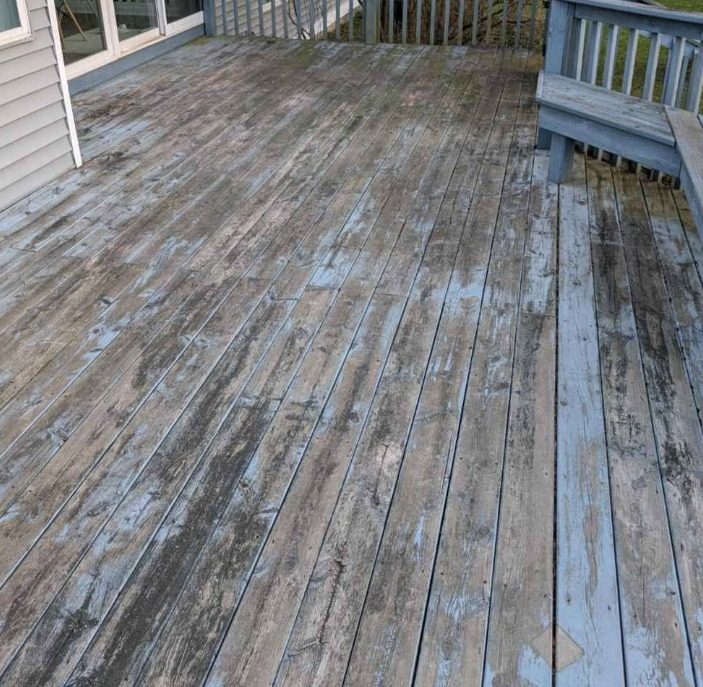
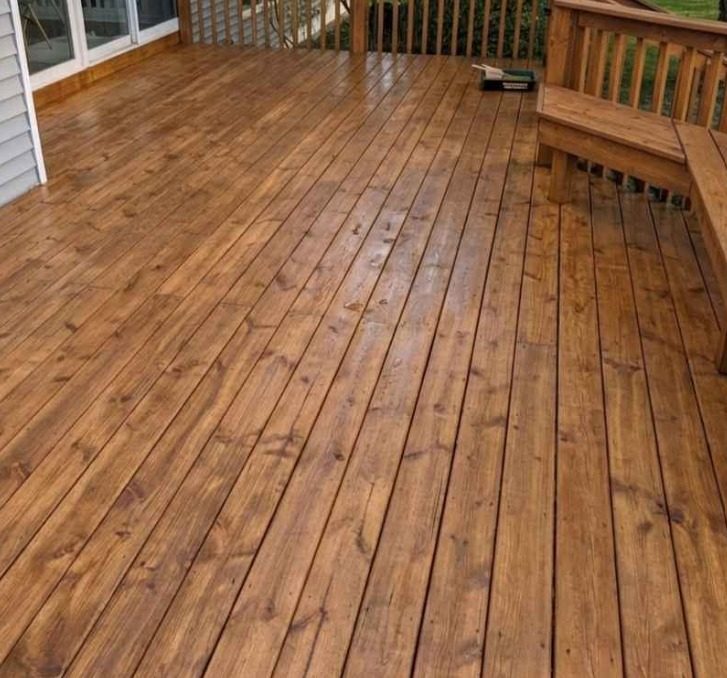
A wood deck in northern Illinois takes a beating: freeze-thaw cycles from November to March, snow sitting on the boards for weeks, then full summer sun from June on. Stain is what keeps water out of the grain and UV off the surface. Skip it for a few seasons and the boards go gray, then fuzzy, then start to check and cup. Deck staining is the single most cost-effective thing you can do to make a deck last.
We stain cedar, pressure-treated pine, and hardwood decks across Lake County. Every job starts with a proper wash and a moisture check, because stain applied to dirty or damp wood peels within a year. Then we apply a penetrating oil or oil-hybrid stain in the tone you pick, back-brushed so it soaks in instead of sitting on top.
Most deck staining problems come from prep, not product. A deck that was power-washed and stained the same afternoon will look fine for a month and fail by the following spring because the wood was still wet inside. We wash, let the deck dry to under 15% moisture, sand any raised grain, then stain. It takes an extra visit. It is the difference between a finish that lasts three or four years and one that lasts one.
We do a lot of this work in Gurnee, Mundelein and Indian Creek, and the central Lake County towns like Vernon Hills and Green Oaks keep us busy through the season. See every town on the areas page, or jump to Deck staining in Mettawa.
Deck staining usually pairs with one of these.
Text a photo of your deck or fence and get a number back. We answer Mon–Sat 7am–7pm.
Text (224) 944-8652The finish is gone and the top fibers are oxidizing. A clean, brighten and penetrating stain brings it back before the boards start to check.
Applied over dirt, mildew or damp wood. It needs a full clean and, if it is a film finish, a strip before restaining.
South and west faces take the UV. Those get a second coat and a stain with stronger pigment on the next round.
The simplest test. When water soaks straight in on the horizontals, the deck is due.
Treated pine needs a few months to dry out; cedar needs the mill glaze washed off. Then it is ready.
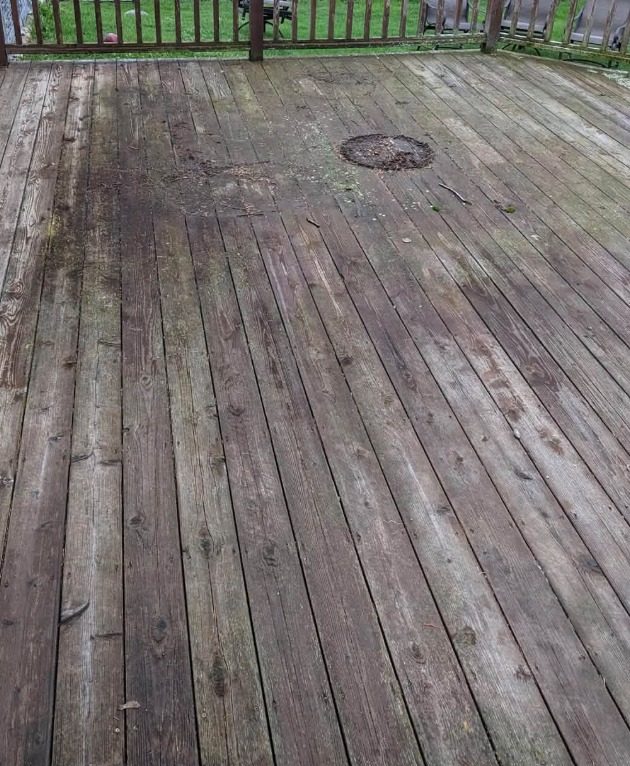
See the pricing page for how we quote, or text photos and get a real number.
Our season runs roughly late April through October. Stain needs the wood dry, temperatures between about 50 and 90 degrees, and 24 to 48 hours without rain afterward. In Lake County that means spring and early fall are the best windows, with midsummer jobs scheduled around heat and pop-up storms. We book spring work early because the good weeks fill fast.
After staining, keep furniture and foot traffic off for 24 to 48 hours, longer if it is humid. Rinse pollen and leaves off through the season instead of letting them sit and hold moisture. Move planters and rugs periodically so they do not leave shadows. Rinse the deck each spring with a hose, and when water stops beading on the horizontal boards, that is the signal for a maintenance coat. Done on that schedule, a deck never needs stripping again.
Every two to four years for horizontal boards, depending on sun exposure and stain type. Rails and vertical surfaces last longer. A south- or west-facing deck with no shade sits at the short end of that range.
New pressure-treated lumber needs to dry out first, usually a few months, and should be tested with a few drops of water. If the water soaks in, it is ready. New cedar can usually be stained within a few weeks once the mill glaze is washed off.
Late May through early October. We need two dry days after washing and 24 to 48 hours of no rain after staining, with temperatures between roughly 50 and 90 degrees. Spring and early fall are ideal because the sun is not baking the stain before it soaks in.
Mostly penetrating oil or oil-hybrid stains, because they soak into the wood rather than forming a film that can peel. For a solid color we use a high-quality acrylic solid stain. We will recommend based on the wood and the last finish it had.
Usually, yes. Send a photo of the current deck and, if you have it, the old can. We can get very close with the same product line, and if the old stain is discontinued we will sample two options on a hidden board.
No, and it is not needed. Undersides do not get sun or standing water. We do stain the fascia, stair stringers and any visible framing.
Every town we serve has its own deck staining page.
Text a photo of the wood and your town. Quotes usually come back the same day.
Text a photo of your deck or fence and get a number back. We answer Mon–Sat 7am–7pm.
 Lake CountyFence & Deck Restoration