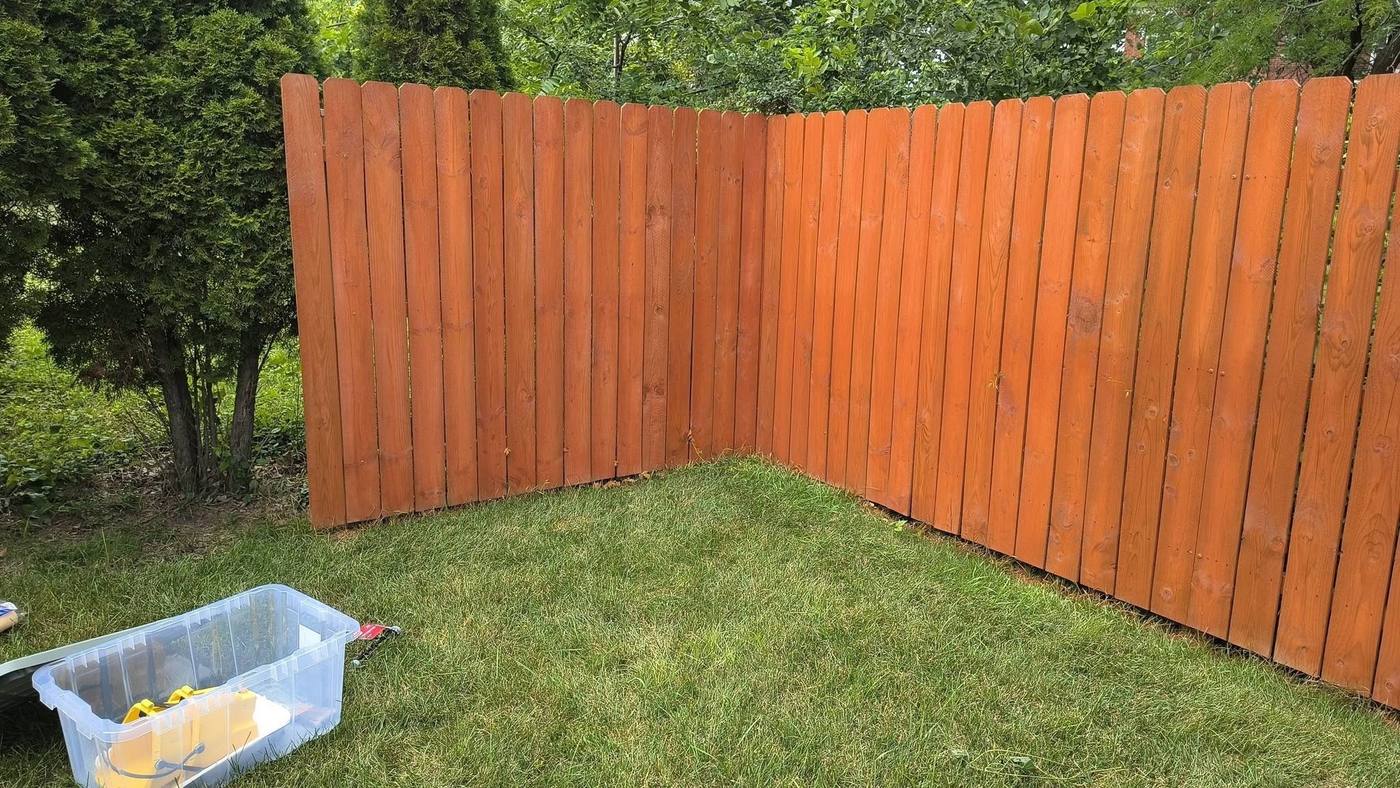
deck restoration near me
Strip failed stain, sand, brighten and refinish a weathered deck so it looks and performs like new wood. Based in Libertyville, serving all of Lake County IL and southeast Wisconsin.
Deck, stripped and refinished
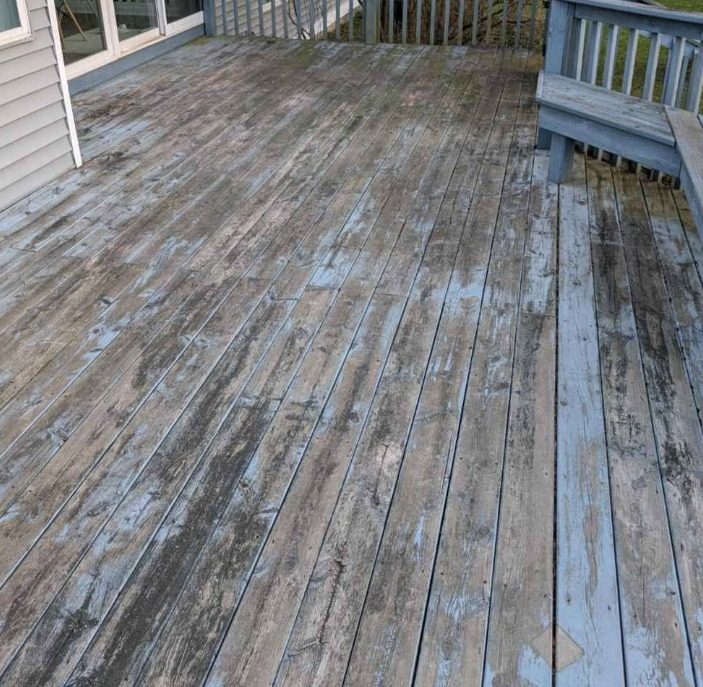
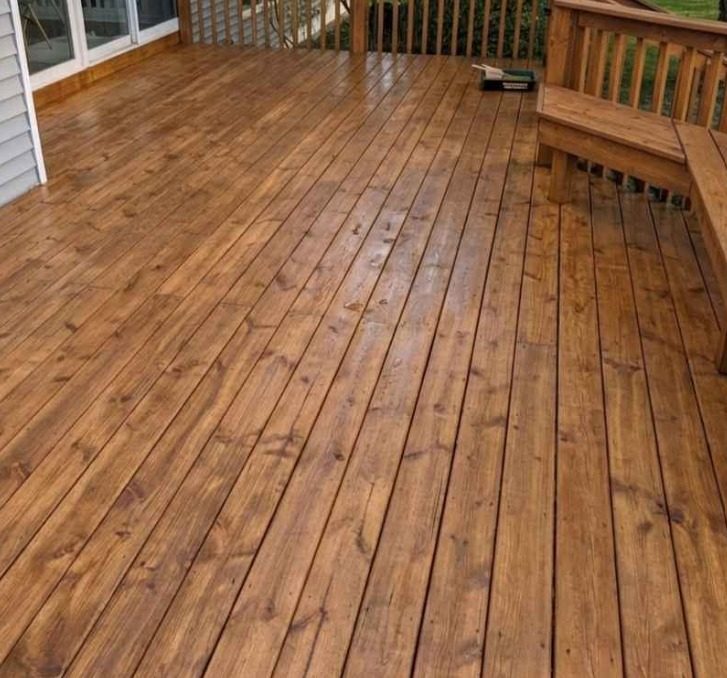
Restoration is what a deck needs when cleaning is not enough. Peeling solid stain, a film-forming finish that has cracked, boards that are gray and fuzzy from years of neglect, or a deck that was stained over dirt and is now blotchy. We strip it back to bare wood, sand what needs sanding, brighten, and refinish with a penetrating stain that will not peel.
A lot of the older decks in Lake County are cedar from the 1980s and 1990s, and a lot of them are sound underneath a bad finish. Restoration is usually a fraction of the cost of replacement. We will tell you plainly when a deck is past saving, but most are not.
The reason so many decks look bad is that each new coat went over the last failed one. Stain does not stick to stain that is letting go. Restoration resets the deck to bare wood so the new finish bonds to the grain, not to a flaking layer underneath it. Done right, it is the last time the deck needs anything more than a maintenance coat for years.
We do a lot of this work in Gurnee, Mundelein and Indian Creek, and the central Lake County towns like Vernon Hills and Green Oaks keep us busy through the season. See every town on the areas page, or jump to Deck restoration in Mettawa.
Deck restoration usually pairs with one of these.
Text a photo of your deck or fence and get a number back. We answer Mon–Sat 7am–7pm.
Text (224) 944-8652The most common restoration. Strip, sand, brighten, refinish with a penetrating product.
Paint traps moisture and always peels on horizontals. It has to come off entirely.
Each layer failing at a different rate. Stripping back to bare wood is the only reset.
A film-forming clear that cracked. Strip it and go to a penetrating oil instead.
We tell you when replacement is the honest answer. Usually a few boards, rarely the whole deck.
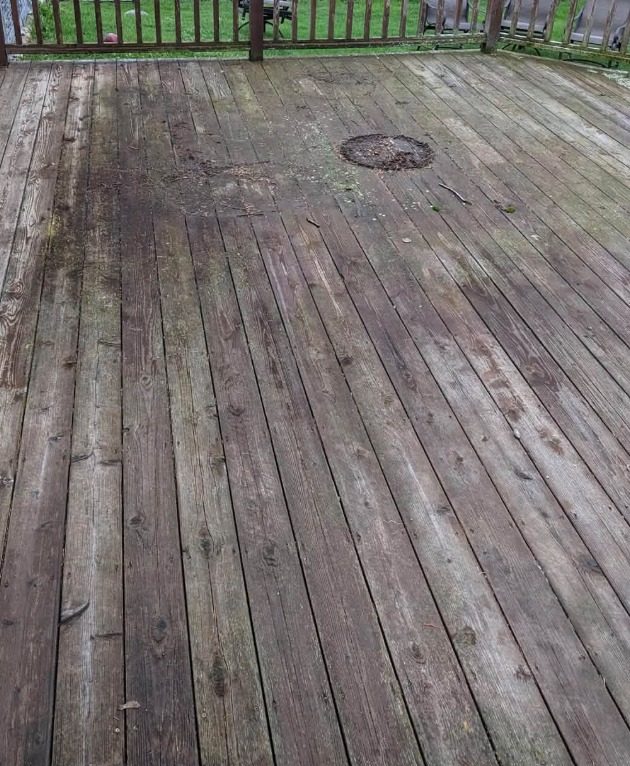
See the pricing page for how we quote, or text photos and get a real number.
Our season runs roughly late April through October. Stain needs the wood dry, temperatures between about 50 and 90 degrees, and 24 to 48 hours without rain afterward. In Lake County that means spring and early fall are the best windows, with midsummer jobs scheduled around heat and pop-up storms. We book spring work early because the good weeks fill fast.
After staining, keep furniture and foot traffic off for 24 to 48 hours, longer if it is humid. Rinse pollen and leaves off through the season instead of letting them sit and hold moisture. Move planters and rugs periodically so they do not leave shadows. Rinse the deck each spring with a hose, and when water stops beading on the horizontal boards, that is the signal for a maintenance coat. Done on that schedule, a deck never needs stripping again.
If the finish is peeling, flaking or cracking, or if a previous stain went on blotchy, it needs stripping. If the deck is just gray or dirty with no failing coating, cleaning and staining is enough.
Yes. Paint and solid stain are the hardest to strip and often need sanding as well. It takes longer, and the result is worth it: bare wood that takes a proper penetrating finish.
Close. Stripping and sanding remove the gray and the failed finish, and the brightener brings back the wood tone. Old checks and small cracks will still be there, which is normal on a deck that is 20 years old.
Typically three to five days across two or three visits, mostly waiting for drying between stripping, sanding and staining. The on-site time is one to two days.
Restoring is usually far cheaper, as long as the framing and most boards are sound. We will tell you if we find rot in the joists or ledger, because at that point replacement is the honest answer.
Every town we serve has its own deck restoration page.
Text a photo of the wood and your town. Quotes usually come back the same day.
Text a photo of your deck or fence and get a number back. We answer Mon–Sat 7am–7pm.
 Lake CountyFence & Deck Restoration