(224) 944-8652
Lake County Fence & Deck Restoration logoLake CountyFence & Deck Restoration

Fence Cleaning done properly

Fences catch everything: sprinkler water, lawn clippings, mud splash and shade from the neighbor's trees. Within a few seasons a cedar fence in Lake County is green at the bottom, black in the shade and gray on top. Cleaning it restores the wood tone and, if you are planning to stain, it is the mandatory first step.

We clean fences with a percarbonate wood cleaner and a low-pressure rinse, the same way we clean decks. A pressure washer wand at 3,000 PSI held close to a fence board will leave permanent stripe marks and splinter the surface. We have been called to fix a lot of those.

Why prep is the whole job

A fence that has never been cleaned will not take stain evenly, and a fence that was blasted with high pressure will take stain in blotches wherever the surface was torn. Cleaning is not glamorous, but it is what decides how the stain looks. If your fence just needs to stop being green, cleaning alone is a good yearly maintenance job.

Where we do this

We do a lot of this work in Gurnee, Mundelein and Indian Creek, and the central Lake County towns like Vernon Hills and Green Oaks keep us busy through the season. See every town on the areas page, or jump to Fence cleaning in Mettawa.

Also worth reading

Fence cleaning usually pairs with one of these.

Deck cleaning · Deck sealing · Fence staining

Get a number today

Text a photo of your deck or fence and get a number back. We answer Mon–Sat 7am–7pm.

Text (224) 944-8652

Fence cleaning problems we see most

Algae on the shaded side

The north side of an east-west fence. Percarbonate cleaner and a scrub at the base.

Black mildew spots

Dead growth in the grain. The cleaner lifts it; the brightener removes the shadow.

Wand marks from a previous pressure wash

Permanent stripes in the wood. Cleaning cannot remove them, but a semi-solid stain hides them.

Rust streaks from fasteners

An oxalic brightener removes iron stains.

Sprinkler overspray stains

Mineral deposits and green growth in one band. Cleaned, then the sprinkler head gets adjusted.
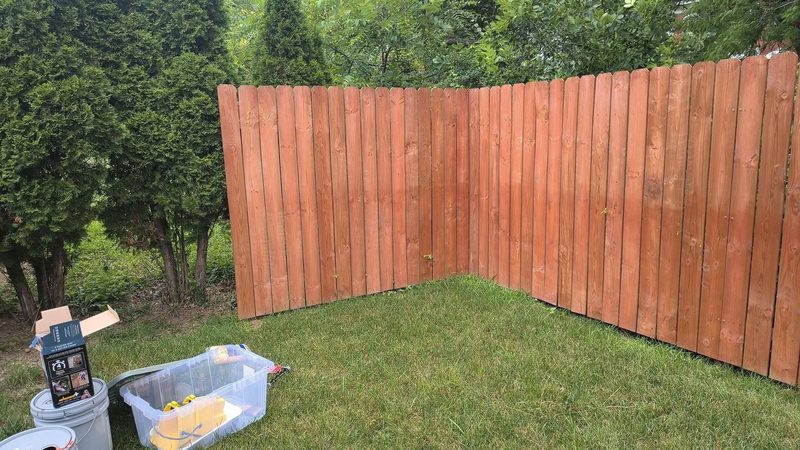
Fence work, before and after

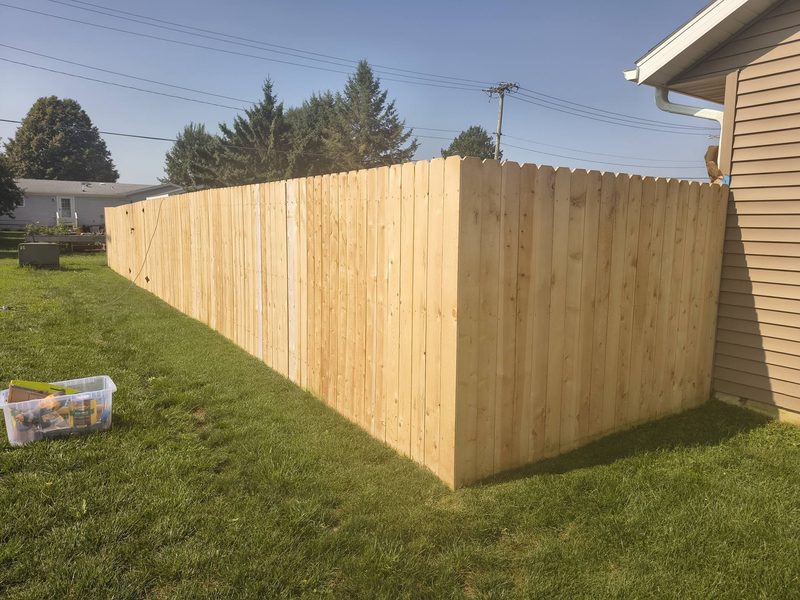
Bare new cedar dog-ear privacy fence around a backyard, before stain
Before New cedar dog-ear privacy fence, bare, before stain
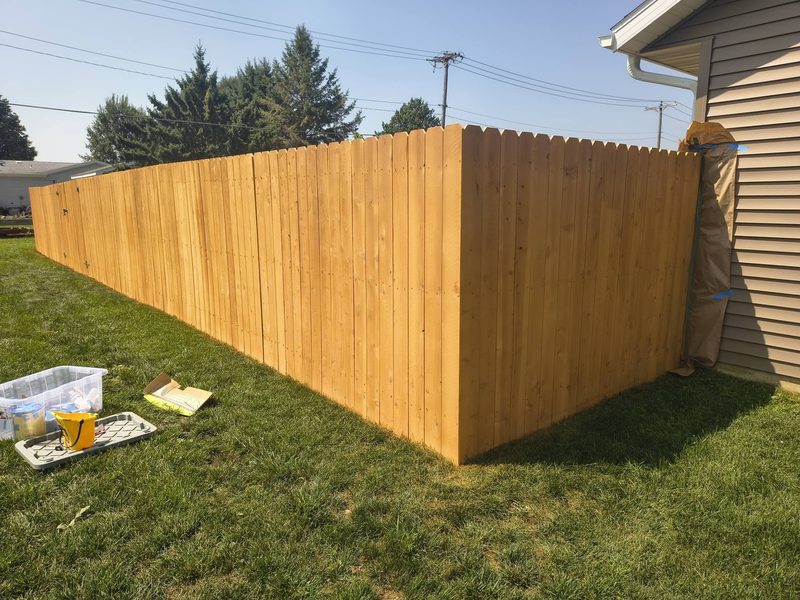
The same cedar privacy fence after a warm semi-transparent stain, siding masked with paper
After Same fence after staining, with the siding masked off
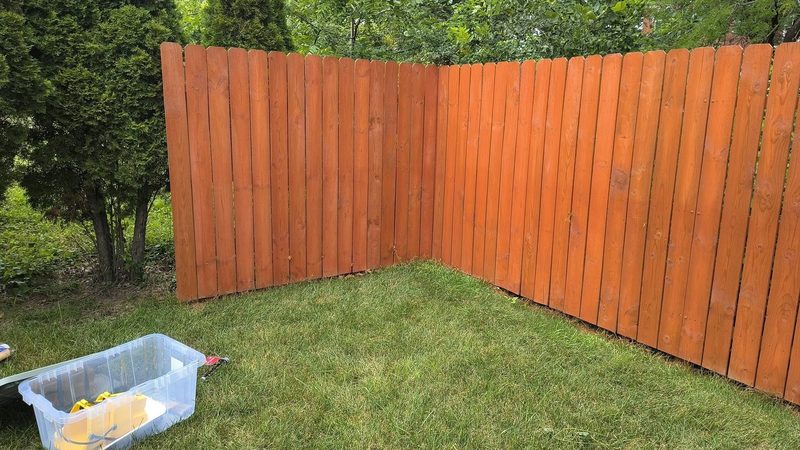
Weathered cedar fence corner with faded reddish stain, before
Before Fence corner with a faded, uneven finish
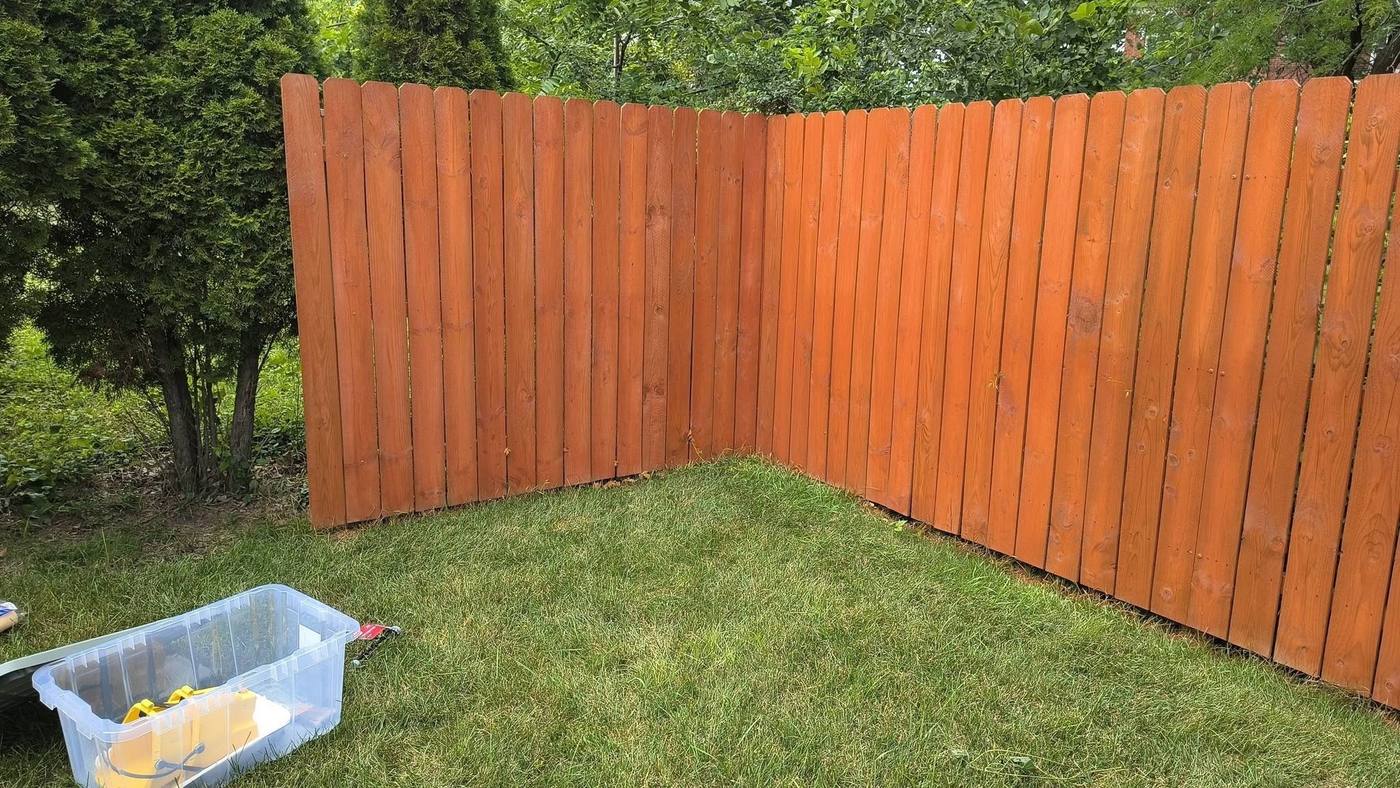
The same fence corner after a fresh redwood-tone stain
After Same corner after a fresh redwood-tone stain

How we do it

  1. Pre-wet and protectPlants along the fence line are soaked so the cleaner does not affect them. Siding and windows in range are rinsed.
  2. Apply cleanerSodium percarbonate solution goes on by pump sprayer, dwells 10 to 15 minutes and lifts algae, mildew and gray oxidation.
  3. Scrub problem spotsThe bottom foot of the fence and shaded sections get a stiff brush where growth is thick.
  4. Low-pressure rinseWide fan tip, well off the boards, working top to bottom so dirty water does not re-streak clean areas.
  5. Brighten if stainingIf the fence is being stained, an oxalic brightener follows to neutralize and bring back the cedar tone.

What affects the price

  • Linear feet and height
  • One side or both
  • Amount of growth: a fence backing onto a wooded lot takes longer than one along a sunny driveway
  • Fence style and how much surface the panels have
  • Whether it is a standalone clean or the first step of a staining job

See the pricing page for how we quote, or text photos and get a real number.

Stain options

  • Transparent and toner: Shows all the grain, least UV protection, shortest life. Best on new cedar and hardwood.
  • Semi-transparent: Our most common choice. Adds color, shows grain, three to four years on horizontals.
  • Semi-solid: More pigment, hides weathering and mismatched boards, still shows some texture. Good on older decks and fences.
  • Solid: Opaque like paint but breathable. Longest UV life, but it will eventually peel and needs stripping to change. We use it when you want a color.
Natural cedarTransparent to semi-transparent, shows the grain
Honey goldWarm semi-transparent, most popular on cedar
RedwoodSemi-transparent, classic deck tone
WalnutSemi-solid, hides older weathering
Driftwood graySemi-solid or solid, modern look on fences

Timing in Lake County

Our season runs roughly late April through October. Stain needs the wood dry, temperatures between about 50 and 90 degrees, and 24 to 48 hours without rain afterward. In Lake County that means spring and early fall are the best windows, with midsummer jobs scheduled around heat and pop-up storms. We book spring work early because the good weeks fill fast.

Wood types we work on

  • Cedar: The most common deck and fence wood in Lake County. Naturally rot-resistant but soft, so it tears under high pressure. Takes penetrating oil beautifully and holds a semi-transparent tone for three to four years.
  • Pressure-treated pine: Builder-grade decking on most 1990s-and-newer homes. Needs to dry out for months after installation before it will accept stain. Greens up in shade fast. Semi-solid stains hide its uneven color well.
  • Hardwood (ipe, cumaru, tigerwood): Dense and oily, so it absorbs very little. Needs a hardwood-specific penetrating oil applied thin and wiped back. Left bare it goes a uniform silver, which some people want.
  • Composite and PVC: Does not take stain and should not be coated. Needs periodic cleaning with a composite-safe product and low pressure to remove mildew, pollen and tannin stains.

Before we arrive

  • Move furniture, grills, rugs and planters off the deck or away from the fence line the night before
  • Leave an outdoor spigot on and reachable; we bring our own hoses
  • Let neighbors know if we are staining a shared fence, so cars and patio furniture on their side are moved
  • Turn off sprinklers for two days before and two days after
  • Keep pets inside while the cleaner is on the wood and until the stain is dry to the touch
  • If HOA approval is needed for a color, get it in writing before the stain day

Aftercare

After staining, keep furniture and foot traffic off for 24 to 48 hours, longer if it is humid. Rinse pollen and leaves off through the season instead of letting them sit and hold moisture. Move planters and rugs periodically so they do not leave shadows. Rinse the deck each spring with a hose, and when water stops beading on the horizontal boards, that is the signal for a maintenance coat. Done on that schedule, a deck never needs stripping again.

Fence cleaning FAQ

Can you pressure wash a wood fence?

Only at low pressure with a wide tip, after a cleaner has done the work. High pressure splinters fence boards and leaves wand marks. We rinse, we do not blast.

Will cleaning kill the plants along my fence?

The cleaners we use are oxygen-based and break down into soda ash and water. We wet plants before and rinse after, and have not had issues with lawns or perennials.

How often should a fence be cleaned?

Once a year in shaded or sprinklered yards, every two years in sunny ones. Cleaning yearly also extends the life of the stain.

Can you clean a vinyl or composite fence?

Yes, with a different cleaner and even lower pressure. Vinyl fences mostly need algae and dirt removed and come up well.

Fence cleaning by town

Every Lake County town has its own fence cleaning page.

Fence cleaning in Libertyville and all of Lake County

Text a photo of the wood and your town. Quotes usually come back the same day.

Call (224) 944-8652
CallGet a quote