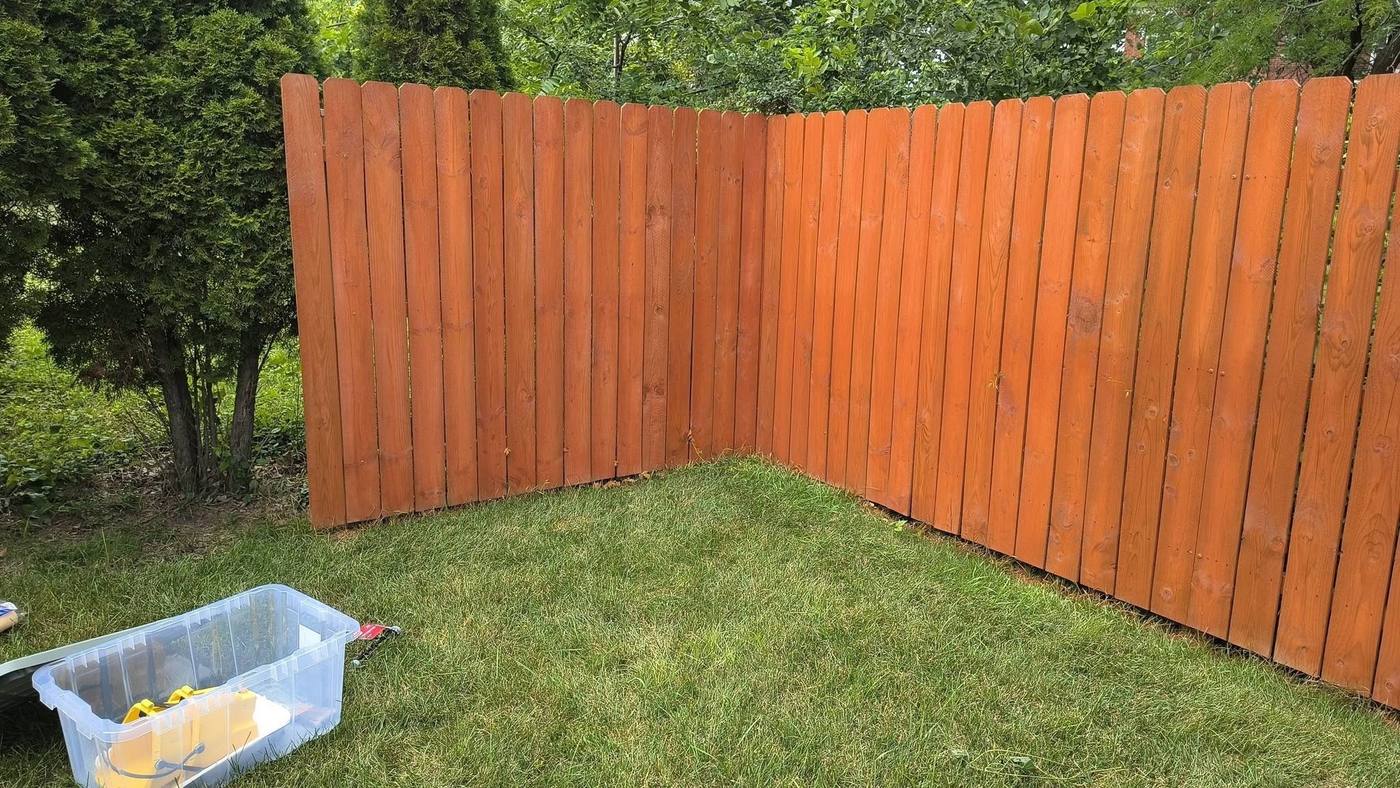
fence staining near me
Spray-and-back-brush staining for cedar and pine privacy fences, both sides, with plants and neighbors protected. Based in Libertyville, serving all of Lake County IL and southeast Wisconsin.
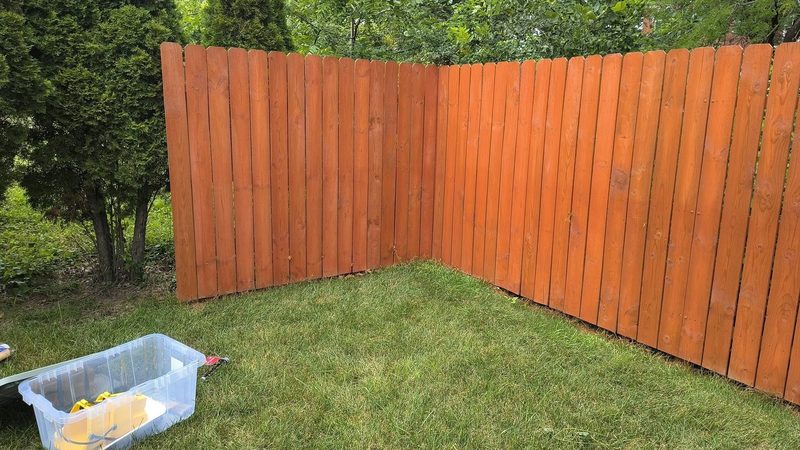
Cedar fence, bare to stained
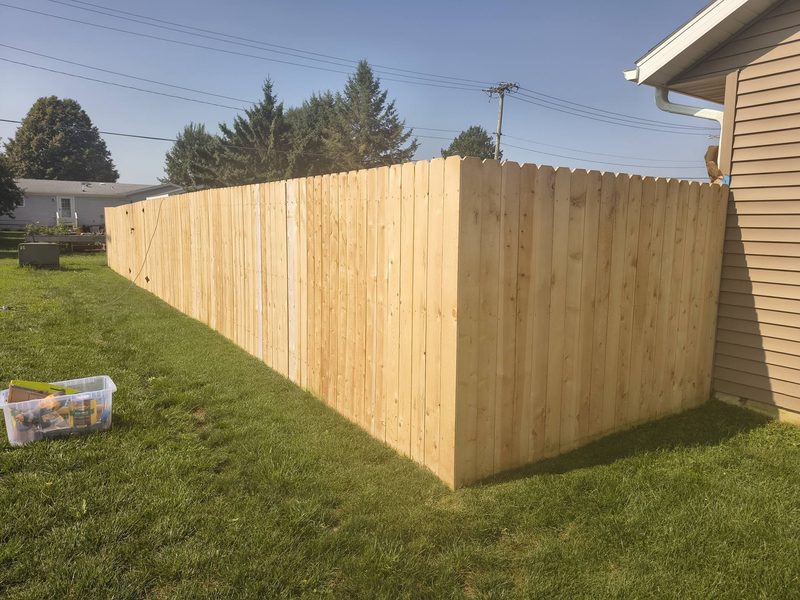
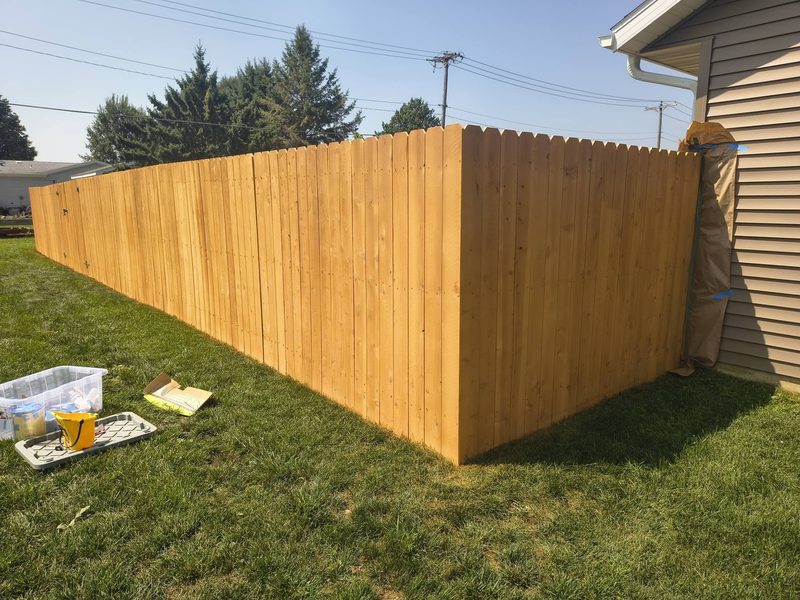
A cedar privacy fence is one of the bigger investments in a Lake County backyard, and it is also the one people forget about. Unstained, a new cedar fence goes silver-gray in about a year and starts to check and warp within three. A good semi-transparent stain keeps the color, blocks UV and sheds water. It also makes the fence look cared for from the street, which matters when you sell.
We stain fences of every length, from a 60-foot side yard to a 400-foot perimeter. Fences are sprayed for coverage and back-brushed for penetration, one side at a time, with the neighbor's side handled by agreement. Overspray protection for grass, beds, siding and vehicles is part of the job.
Fence staining is a volume job, so the shortcuts are obvious: a quick spray with no back-brush, no cleaning first, one side only. That fence looks great for a summer and fails the next. We clean the fence first because a new fence has mill glaze and an old one has gray and mildew, and stain does not bond to either. Then we spray and brush so the stain is in the wood, not on it.
We do a lot of this work in Gurnee, Mundelein and Indian Creek, and the central Lake County towns like Vernon Hills and Green Oaks keep us busy through the season. See every town on the areas page, or jump to Fence staining in Mettawa.
Fence staining usually pairs with one of these.
Text a photo of your deck or fence and get a number back. We answer Mon–Sat 7am–7pm.
Text (224) 944-8652The fence was never stained. Clean, brighten, and a semi-transparent stain restores the color.
Sprinklers and shade below, sun above. Cleaned together, stained together, they even out.
No back-brush and no cleaning. Usually needs a clean and a semi-solid to even the tone.
The smooth planed surface that repels stain. A wash and a few weeks of weather fix it.
We match the approved tone and can sample two boards before the whole fence.
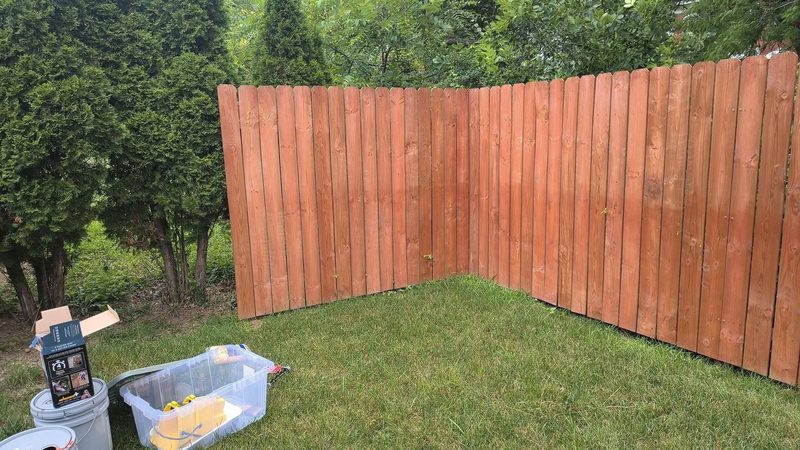
See the pricing page for how we quote, or text photos and get a real number.
Our season runs roughly late April through October. Stain needs the wood dry, temperatures between about 50 and 90 degrees, and 24 to 48 hours without rain afterward. In Lake County that means spring and early fall are the best windows, with midsummer jobs scheduled around heat and pop-up storms. We book spring work early because the good weeks fill fast.
After staining, keep furniture and foot traffic off for 24 to 48 hours, longer if it is humid. Rinse pollen and leaves off through the season instead of letting them sit and hold moisture. Move planters and rugs periodically so they do not leave shadows. Rinse the deck each spring with a hose, and when water stops beading on the horizontal boards, that is the signal for a maintenance coat. Done on that schedule, a deck never needs stripping again.
Once the mill glaze is washed off and the wood is dry, usually two to eight weeks after installation. Pressure-treated fences need longer, often three to six months, until water soaks in rather than beading.
We can. Many homeowners do their side only, or split the cost with a neighbor. Both sides gives the longest life because it seals the wood all the way around.
A quality semi-transparent stain on a cedar fence lasts three to five years. Solid stains last longer but will eventually peel, so we recommend semi-transparent or semi-solid unless you want an opaque color.
We shield everything in range and work with the wind, not against it. Grass right at the fence line gets wetted down first so any overspray rinses off.
Yes. Driftwood gray, charcoal and dark walnut are popular on modern horizontal fences. Semi-solid gives the color without hiding all the grain.
Every town we serve has its own fence staining page.
Text a photo of the wood and your town. Quotes usually come back the same day.
Text a photo of your deck or fence and get a number back. We answer Mon–Sat 7am–7pm.
 Lake CountyFence & Deck Restoration